
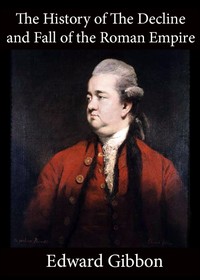
History of the Decline and Fall of the Roman Empire — Volume 3 by Edward Gibbon
Alright, let's set the scene. Imagine a family business that's grown way too big. The original founder's vision is gone, the two branches barely talk, and everyone's arguing about the company mission statement while competitors are stealing all the clients. That's Rome in the 4th and 5th centuries A.D. Gibbon picks up the story after Constantine and guides us through the final, messy act.
The Story
This volume covers the period from the late 300s to 476 A.D., the traditional date for the fall of the Western Empire. We see the empire permanently split into Eastern and Western halves. The East, centered in Constantinople, gets richer and more stable. The West, based in Italy, gets poorer, more chaotic, and constantly under threat. Gibbon walks us through a parade of emperors, many of them weak or installed by military strongmen. He shows how Germanic tribes like the Visigoths and Vandals, once hired as mercenaries, eventually carve out their own kingdoms inside Roman territory. The climax isn't one big battle, but a slow-motion collapse where the central government in the West just... stops functioning. The last Roman emperor in the West, a teenager named Romulus Augustulus, is gently deposed by a Germanic general, and nobody really bothers to replace him.
Why You Should Read It
Gibbon's genius is in the connections he makes. He doesn't just list events; he shows how they're linked. A theological debate about the nature of Christ in a church council might seem boring, but Gibbon argues it sapped the energy and unity the empire desperately needed to face real-world threats. He has a sharp, sometimes sarcastic wit when describing power-hungry bishops or incompetent emperors. You feel the frustration of watching a society with all the advantages—history, infrastructure, legal systems—make the worst possible choices at every turn. It's a masterclass in how civilizations decay.
Final Verdict
This book is for anyone who loves a great, tragic story. You don't need to be a history expert. If you enjoy complex narratives about power, belief, and institutional failure, Gibbon is your guide. Be warned: his prose is from the 18th century, so it's dense and demands your attention. But the payoff is immense. You'll finish this volume not just knowing what happened to Rome, but feeling like you understand why. It's perfect for readers who like big ideas, patient storytelling, and seeing the echoes of ancient drama in our world today.
This content is free to share and distribute. You can copy, modify, and distribute it freely.
Carol Thomas
1 year agoAs someone who reads a lot, it manages to explain difficult concepts in plain English. Absolutely essential reading.








Aiden Williams
1 year agoSolid story.