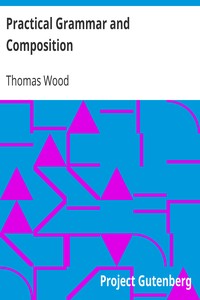
Practical Grammar and Composition by Thomas Wood
Let's be honest: 'Practical Grammar and Composition' doesn't sound like a page-turner. Published in 1908, it's a textbook. But Thomas Wood had a mission. He saw students struggling with writing because they never truly learned the fundamentals of their own language. His book is a systematic tour through English grammar, from the basic parts of speech all the way up to constructing full paragraphs and essays.
The Story
There's no plot, but there is a clear journey. Wood starts with the absolute basics—nouns, verbs, adjectives—assuming you know nothing. He builds from there, explaining sentence structure, punctuation, and common errors. The second half focuses on applying those rules to real writing: crafting different types of sentences, building paragraphs, and finally, composing full themes (what we'd call essays). It's a straight shot from 'What is a noun?' to 'How do I write a persuasive argument?' The 'characters' are the parts of speech themselves, and the 'conflict' is the constant fight against vagueness and error.
Why You Should Read It
Here's the thing: this book is shockingly clear. Wood cuts through the fog. He doesn't get bogged down in fancy terminology for its own sake. His explanations are logical, direct, and full of examples that actually make sense. Reading it feels like getting a masterclass in clear thinking. You realize that good grammar isn't about being a snob; it's about making sure your ideas land with the force you intend. In our world of quick texts and fragmented communication, there's something deeply satisfying about revisiting these structured foundations. It makes you more aware of the tools you're using every time you write an email or a social media post.
Final Verdict
This isn't for everyone. If you're looking for a modern guide with memes and jokes, look elsewhere. But if you're a writer, a student, or just someone who feels shaky about the rules of English and wants a no-nonsense, foundational guide, this century-old book is a secret weapon. It's perfect for self-learners who appreciate a logical, step-by-step approach, and for anyone curious about how the advice on clear writing has (or hasn't) changed in over a hundred years. It’s a solid, reliable classic that does exactly what it promises.
The copyright for this book has expired, making it public property. You are welcome to share this with anyone.
Thomas Harris
1 year agoThe layout is very easy on the eyes.
Elizabeth Rodriguez
7 months agoAfter finishing this book, it manages to explain difficult concepts in plain English. Highly recommended.
Ava Clark
2 months agoI have to admit, the depth of research presented here is truly commendable. A true masterpiece.
Emily Allen
3 months agoGreat read!
Nancy Martin
1 year agoHelped me clear up some confusion on the topic.