
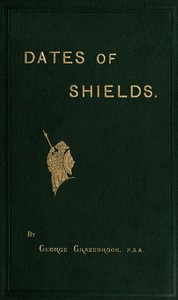
The Dates of Variously-shaped Shields, with Coincident Dates and Examples
So, what's this book actually about? It's not a novel with a plot, but it absolutely has a quest. George Grazebrook spends years tracking down every example of medieval shields he can find. He scours churches, tombs, stained glass windows, and old seals, meticulously noting their shapes—kite shields, heater shields, round bucklers. His big idea is that these shapes changed over time in a way that can be dated. By finding shields on monuments that have known dates (like a knight's tomb), he builds a timeline. The 'story' is him presenting his case, piece by piece, showing you a shield from 1190, another from 1240, and explaining how the evolution works. The conflict is between the messy, unclear historical record and his desire to bring order to it. He's arguing with the past, trying to make it give up its secrets.
Why You Should Read It
You should read it because it makes you see history in a new way. Grazebrook's passion is contagious. He's not a stuffy academic; he's a fanatic showing off his favorite collection, and that collection is evidence. You start to appreciate the incredible amount of detail preserved in stone and paint that we often walk right past. The book turns you into a mini-detective. After a few chapters, you'll look at a medieval painting and think, 'Hmm, that shield shape suggests early 13th century,' and feel a little thrill of connection. It's a masterclass in focused curiosity, showing how one person's niche obsession can actually build a useful tool for understanding the past.
Final Verdict
This is a perfect book for a very specific kind of reader: the history buff who loves deep dives into material culture, the armchair detective who enjoys forensic puzzles, or the writer/artist looking for authentic period detail. It's also great for anyone who just enjoys watching a passionate expert explain their life's work. It's not a casual read—it's dense with examples and lists—but if you're in the right mood, it's strangely gripping. Think of it as the Victorian equivalent of a super-niche, brilliantly researched podcast episode. If you've ever wondered how historians actually *know* things about everyday objects from centuries ago, Grazebrook will show you, one shield at a time.
This text is dedicated to the public domain. Knowledge should be free and accessible.
Lisa Garcia
1 year agoUsed this for my thesis, incredibly useful.
Linda Torres
1 year agoThe fonts used are very comfortable for long reading sessions.
Emily Scott
1 year agoI stumbled upon this title and the clarity of the writing makes this accessible. Truly inspiring.



Barbara Gonzalez
1 year agoBeautifully written.