
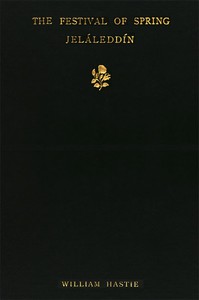
The Festival of Spring, from the Díván of Jeláleddín by Maulana Jalal al-Din Rumi
Let's be clear from the start: this isn't a book you read for a twisty plot. 'The Festival of Spring' is a selection of poems and teachings from the Persian sage Rumi, translated for an English audience. There are no characters in the usual sense, unless you count the poet himself (often speaking as a passionate lover) and the beloved (which is God, or divine love). The 'story' is the journey of the human soul. It starts with feeling lost, confined by the ego and the material world. Then, through poems that celebrate wine, music, dance, and nature, Rumi shows us a path out. He argues that rational thinking alone is a prison. True freedom comes from love, from losing yourself in something greater. The climax isn't an event, but a realization—a moment where the seeker understands that the separation they feel is an illusion, and they have always been part of the divine 'festival.'
Why You Should Read It
I picked this up on a whim, and it completely disarmed me. I expected serious, dense spiritual writing. Instead, I found playfulness and raw emotion. Rumi uses everyday images—a tavern, a cup of wine, a nightingale crying for a rose—to talk about huge ideas. His voice feels immediate. One minute he's joking about sober scholars, the next he's describing heartbreak so vividly you feel it in your chest. It cut through my modern cynicism. In a world that values busyness and productivity, these poems are a radical permission slip to prioritize joy, connection, and inner stillness. They remind you that the point isn't to figure everything out, but to experience it fully.
Final Verdict
This book is perfect for anyone feeling a little spiritually hungry or emotionally worn out. It's for the seeker, the daydreamer, the person who looks at a sunset and feels a pang of something they can't name. It's also great for poetry newcomers because the translations here are accessible and the ideas are so visceral. You don't need any background in Sufism or philosophy. Just open it, read a few poems, and let them sit with you. It's the kind of book you keep on your bedside table, not to race through, but to visit with, one 'festival' at a time.
This book is widely considered to be in the public domain. Share knowledge freely with the world.
Betty Moore
11 months agoI came across this while browsing and the flow of the text seems very fluid. I couldn't put it down.
Joshua Lewis
4 months agoRecommended.
Noah Hill
1 year agoLoved it.








Steven Lee
8 months agoVery helpful, thanks.