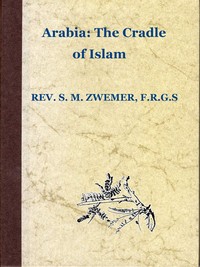
Arabia: The Cradle of Islam by Samuel Marinus Zwemer
Samuel Zwemer's Arabia: The Cradle of Islam is a book that feels like it was written with sand still in its pages. Published in 1900, it’s a firsthand report from a place that was more legend than reality to most of his readers.
The Story
There isn't a traditional plot. Instead, Zwemer takes us on a journey through the Arabian Peninsula at the turn of the 20th century. He describes everything: the harsh, beautiful emptiness of the desert, the bustling holy cities of Mecca and Medina (which he could only report on from the outskirts, as a non-Muslim), and the complex social codes of the Bedouin tribes. He talks about trade, camels, ancient ruins, and the powerful grip of Islamic tradition on every aspect of life. The 'story' is his attempt to map, understand, and ultimately engage with a civilization from his unique vantage point as a dedicated Christian missionary.
Why You Should Read It
You read this book for the raw, immersive experience. Zwemer was a sharp observer, and his descriptions make you feel the heat and the vastness. But the real value now is the dual perspective. You get incredible ethnographic detail about a way of life that has changed dramatically. At the same time, you are constantly aware of the author's own world view. His certainty in his religious mission and his colonial-era assumptions are part of the text. Reading it today is an exercise in time travel—you learn about Arabia then, and you also learn about the Western mind then. It’s not an easy, comfortable read, but it is a profoundly interesting one.
Final Verdict
This book is perfect for readers who love primary source adventures and aren't afraid of complicated narrators. If you enjoy the travelogues of T.E. Lawrence or Richard Burton, and you want to see the region through another set of determined—if very different—eyes, you'll find this fascinating. It's also great for anyone interested in the history of Christian-Muslim interaction or the roots of modern Middle Eastern studies. Just remember: you're not getting a modern, balanced analysis. You're getting one man's passionate, biased, and utterly captivating journey into the heart of the Islamic world over 120 years ago.
This text is dedicated to the public domain. It is available for public use and education.