
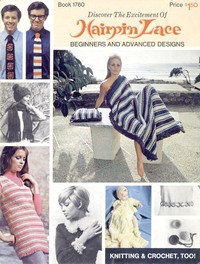
Discover the Excitement of Hairpin Lace by C.J. Bates & Son
I picked up 'Discover the Excitement of Hairpin Lace' expecting a dry, vintage craft manual. What I found was a small, charming artifact with a big mystery. The book itself is a guide to hairpin lace, a technique using a U-shaped 'hairpin' to create delicate, open strips of lace that were popular for trims and collars.
The Story
There isn't a plot in the traditional sense. The 'story' is the book's own existence. It clearly walks you through the craft, from basic stitches to finished projects. But the author is 'Unknown,' even though the cover credits C.J. Bates & Son. This immediately sets off questions. Was this a pamphlet published by a tool company to sell their hairpin looms? Was it written by a skilled craftswoman whose name was never recorded, her work absorbed by the brand? The book becomes a quiet detective story. You read the practical, friendly instructions and can't help but imagine the person behind them—their hands demonstrating the loops, their voice explaining the tension. The conflict is between the tangible skill being taught and the invisible author who mastered it.
Why You Should Read It
This book is a tiny window into a world of making. It’s not about grand art; it's about the satisfaction of creating something beautiful and functional with your hands. For me, the most compelling part was feeling that connection across time. You're following the same steps someone did a century ago. The themes are subtle but powerful: patience, creativity in domestic spaces, and the way women's handicrafts were often practical art. The 'character' is the anonymous author, and by learning their craft, you feel like you're getting to know them a little. It turns a hobby into a kind of historical conversation.
Final Verdict
This is a perfect little find for crafty history lovers, fans of 'slow living,' or anyone who enjoys a good, quiet mystery. It's not a novel, so don't go in expecting one. But if you're intrigued by the stories embedded in everyday objects and skills, you'll be captivated. Think of it as part how-to guide, part historical document, and all heart. You'll come away wanting to try the lace and solve the puzzle of who really wrote it.
This historical work is free of copyright protections. You are welcome to share this with anyone.
Noah Anderson
1 year agoFive stars!
Amanda Anderson
5 months agoCompatible with my e-reader, thanks.
Elizabeth Davis
1 year agoVery interesting perspective.