
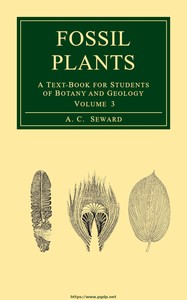
Fossil plants, Vol. 3 : A text-book for students of botany and geology by Seward
Let's be clear from the start: this is not a novel. There's no protagonist, unless you count the ancient plant life of the Carboniferous period. 'Fossil Plants, Vol. 3' is a specialized academic textbook from the early 20th century. Its 'plot' is the systematic classification and description of fossilized plants, focusing heavily on groups like the Pteridosperms (seed ferns) and early Conifers. Sir Albert Charles Seward meticulously documents their structures, compares fossil specimens, and pieces together their place in the evolutionary story of plant life. The 'story' he tells is one of evidence and deduction, showing how a fragment of a leaf or the impression of a stem can unlock secrets of ancient climates, ecosystems, and biological change over millions of years.
Why You Should Read It
You should read this if you are a student of paleobotany or geology, or a seriously dedicated amateur with a foundational knowledge. Its value isn't in casual entertainment but in authoritative detail. Reading Seward feels like sitting in the lab or study of a master scientist from a century ago. His careful, precise descriptions are a window into how foundational knowledge in earth science was built, piece by fossilized piece. There's a certain magic in that direct line to an expert's mind. It’s not simplified for a modern pop-science audience; it assumes you're there to work and learn the real, unvarnished stuff.
Final Verdict
This book is a specialized tool, not general entertainment. It's perfect for university students in relevant fields, professional geologists or botanists needing a historical reference, or perhaps a writer doing deep, accurate research for a prehistoric novel. For the general reader curious about fossils, I'd recommend starting with a more modern, illustrated popular science book. But if you have the background and need to go straight to the primary source material from a pioneer in the field, Seward's work remains an essential, if challenging, classic. Just know what you're getting into—this is the deep end of the scientific pool.
There are no legal restrictions on this material. It is available for public use and education.
Amanda Davis
8 months agoWithout a doubt, it provides a comprehensive overview perfect for everyone. A valuable addition to my collection.