
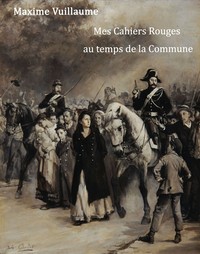
Mes cahiers rouges au temps de la Commune by Maxime Vuillaume
If you pick up a history book about the Paris Commune, you'll get dates, political factions, and battle strategies. Maxime Vuillaume's Mes cahiers rouges gives you something else entirely: the smell of the streets, the taste of bad coffee during long meetings, and the heart-pounding fear of a man running for his life.
The Story
This book is Vuillaume's collected notes, written in those famous red notebooks, as he lived through the spring of 1871. After France loses a war with Prussia, the national government abandons Paris. The city's working people, armed and angry, refuse to surrender. They elect their own government—the Commune—and for just over two months, they try to build a city based on justice and workers' rights. Vuillaume isn't a top leader; he's a journalist and a committed participant. We follow him through the frantic, hopeful early days, into the grind of administration and internal squabbles, and finally into the horror of the 'Bloody Week' when French troops retake Paris street by street, executing thousands.
Why You Should Read It
What makes this book so powerful is its point of view. History is written by winners, but this is written from the middle of the losing side, while the smoke was still in the air. You don't get polished analysis. You get confusion, rumor, gallows humor, and sudden moments of breathtaking courage. Vuillaume shows us the Commune's big ideas, but also its petty arguments and logistical nightmares. He makes you feel the fragile beauty of that short-lived dream and the utter devastation of its collapse. It removes the monument from history and gives you the messy, human reality.
Final Verdict
This isn't a light read, but it's a profoundly moving one. It's perfect for anyone who loves personal diaries or immersive historical narratives. If you enjoyed the feel of Émile Zola's novels or the eyewitness intensity of something like Suite Française, you'll connect with this. It's also essential for understanding revolutions—not as abstract ideas, but as human experiences filled with hope, error, and terrible cost. Be prepared to be swept up and heartbroken.
This is a copyright-free edition. Enjoy reading and sharing without restrictions.
Nancy Harris
2 weeks agoFrom the very first page, the flow of the text seems very fluid. I learned so much from this.
Andrew Taylor
8 months agoI have to admit, the storytelling feels authentic and emotionally grounded. Exactly what I needed.
Joseph White
6 months agoText is crisp, making it easy to focus.
Andrew Brown
2 months agoEssential reading for students of this field.