
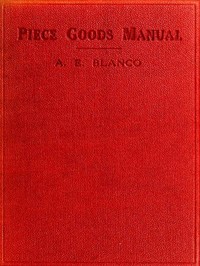
Piece Goods Manual by A. E. Blanco
Let's get this out of the way: this is not a novel. If you're looking for a plot with heroes and villains, you won't find it here. The 'Piece Goods Manual' is exactly what the title promises—a comprehensive, detailed guide to textiles. Published in 1919, it was a textbook for people in the fabric trade. It systematically breaks down different types of cloth: wool, cotton, silk, linen, and mixed goods. For each, it describes how they're made, their key qualities, common uses, and how to spot defects. Think of it as the ultimate field guide for anyone who worked with or sold fabric a century ago.
Why You Should Read It
I picked this up out of sheer curiosity, and I'm so glad I did. While the subject is technical, reading it is a strangely calming, almost meditative experience. You get a profound appreciation for the sheer craft in everyday things. That blanket on your couch? Blanco explains the weave. Your favorite shirt? She details the fiber. It makes you see the material world differently.
But the real magic is the author herself. Knowing that A. E. Blanco was a woman writing with absolute authority in a male-dominated field in 1919 changes everything. The book's dry tone becomes a powerful statement. She doesn't apologize or explain herself; she just knows her stuff. You're not just learning about serge and poplin; you're witnessing a quiet, intellectual triumph. It’s history you can touch, told through the language of thread count and tensile strength.
Final Verdict
This is a niche read, but a fascinating one. It's perfect for history buffs, crafters, textile artists, or anyone fascinated by the hidden stories in ordinary objects. If you love seeing how things work, or if you're intrigued by stories of overlooked experts (especially women in history), give this manual a chance. Don't read it cover-to-cover like a novel. Dip in and out. Read about the fabric of your jeans or your curtains. You'll come away with a deeper respect for both the material and the remarkable mind that cataloged it all.
You are viewing a work that belongs to the global public domain. Thank you for supporting open literature.
William Torres
9 months agoTo be perfectly clear, the narrative structure is incredibly compelling. Exceeded all my expectations.
Emily Miller
7 months agoTo be perfectly clear, the content flows smoothly from one chapter to the next. A true masterpiece.
Lisa Rodriguez
2 months agoAmazing book.