
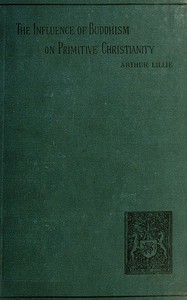
The Influence of Buddhism on Primitive Christianity by Arthur Lillie
Arthur Lillie's book is an investigation, not a story in the traditional sense. Published in 1893, it's his attempt to build a historical argument. Lillie gathers evidence from texts, legends, and historical accounts to suggest that Buddhist missionaries and ideas reached the Middle East before and during the time of Jesus. He then compares specific elements—like the concept of renunciation, parables about charity, and even details in the nativity stories—to similar ones in Buddhist tradition. His goal is to show that these weren't independent inventions, but influences that helped shape the early Christian message.
Why You Should Read It
You should read this not for a final, proven answer, but for the thrill of the chase. Lillie is a detective of ideas, connecting dots across continents and centuries. It makes you look at familiar stories in a completely new light. When he points out a parallel between a saying of Jesus and a teaching of Buddha, you can't help but pause and think. It's less about undermining faith and more about marveling at how human ideas travel and transform. The book itself is a product of its time—the prose can be dense and some references are dated—but the core question it raises is timeless and deeply engaging.
Final Verdict
This book is perfect for curious readers who love religious history, comparative mythology, or unconventional theories. It's for anyone who enjoys a good intellectual puzzle, even if some pieces might be speculative. It's probably not the best choice if you're looking for light reading or a definitive, modern academic consensus. Think of it as a provocative, century-old conversation starter. You might not agree with all of Lillie's conclusions, but you'll definitely come away with a broader, more interconnected view of how great spiritual ideas are born and spread.
This title is part of the public domain archive. Thank you for supporting open literature.
Karen Flores
5 months agoRecommended.





Mary Hernandez
1 month agoGreat digital experience compared to other versions.