
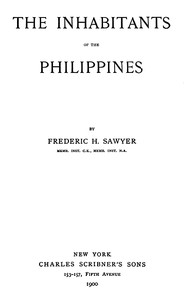
The Inhabitants of the Philippines by Frederic H. Sawyer
Forget textbooks. Frederic H. Sawyer's 'The Inhabitants of the Philippines' is a time capsule. Written over a century ago, it's a first-hand account from a British resident who witnessed the tail end of Spanish rule and the dawn of American administration. The book is packed with details you won't find elsewhere—from the construction of native houses to regional farming techniques, local myths, and social customs.
The Story
There isn't a traditional plot. Instead, Sawyer acts as a guide, walking us through the archipelago. He describes the different ethnic groups—like the Tagalog, Visayan, and Igorot peoples—with a merchant's eye for detail. He talks about their work, their festivals, their homes, and their relationship with the land. The 'story' is the Philippines itself at a moment of massive change, filtered through the lens of a foreign observer who is part chronicler, part critic, and always a product of his time.
Why You Should Read It
You read this not for balanced modern analysis, but for the raw, unfiltered perspective. It's fascinating to see what Sawyer admires (Filipino craftsmanship, resilience) and what he dismisses through his colonial mindset. The value is in reading between the lines. When he complains about 'laziness,' you might see a people resisting exploitative labor systems. His descriptions are so vivid that, with a critical eye, you can build a rich picture of pre-industrial Philippine life. It makes you an active participant, questioning the narrator and uncovering the real story behind his words.
Final Verdict
This book is perfect for history buffs, travelers with a deep interest in Southeast Asia, or anyone who loves primary sources. It's not an easy, feel-good read. It requires patience and a critical mind. But if you're willing to engage with a complicated, often problematic narrator, you'll be rewarded with a unique and startlingly vivid portrait of a nation on the brink of a new century. Pair it with a modern history of the Philippines for the full, enlightening contrast.
This text is dedicated to the public domain. You do not need permission to reproduce this work.
Richard Wilson
1 year agoHaving read this twice, the plot twists are genuinely surprising. A true masterpiece.
Paul Smith
1 year agoI stumbled upon this title and the arguments are well-supported by credible references. I learned so much from this.



Dorothy Rodriguez
1 year agoFrom the very first page, the storytelling feels authentic and emotionally grounded. I would gladly recommend this title.