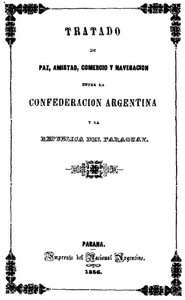
Tratado de Paz, Amistad, Comercio y navegacion entre la Confederación Argentina…
Let's be clear from the start: this isn't a storybook. You won't find any dashing heroes or dramatic plot twists in the traditional sense. 'Tratado de Paz, Amistad, Comercio y navegacion' is exactly what it says it is—the formal treaty signed between the Argentine Confederation and Paraguay in 1852.
The Story
The 'plot' is the end of a long conflict. For years after independence, the region was a patchwork of new countries with unclear borders and competing ambitions. This document marks a turning point. It's the moment two neighbors decided to stop fighting and start talking about how to live side-by-side. The treaty lays out the new rules: where the border is, how trade will work, how ships can navigate the shared rivers, and how citizens of one country will be treated in the other. It's a blueprint for a peaceful relationship, written clause by careful clause.
Why You Should Read It
You should read it because it makes history feel real and immediate. Textbooks tell you 'a treaty was signed.' This is the treaty. You see the priorities right there in the wording—'Peace and Friendship' come first, even before 'Commerce and Navigation.' You get a sense of the practical concerns: guaranteeing safe passage on the rivers was vital for their economies. Reading the formal language, you can almost hear the sighs of relief from people exhausted by war. It strips away a century of analysis and lets you see the foundational deal for what it was: a practical, hopeful attempt to build something stable.
Final Verdict
This is a niche read, but a rewarding one. It's perfect for history buffs and politics nerds who want to go beyond summaries and see a primary source firsthand. If you're curious about how diplomacy actually works, or if you have a specific interest in South American history, this short document is a fascinating artifact. It's not for someone looking for a light narrative, but for the right reader, it's a captivating piece of the puzzle, straight from the archives.
This content is free to share and distribute. Knowledge should be free and accessible.